
No Asteroids Tips: 12 Mistakes That Cost You Days
Twelve practical No Asteroids tips: air budgeting, cargo choice, launch timing, upgrade traps and co-op etiquette that saves whole runs.
The asteroid does not kill you; the clock does. Most failed No Asteroids runs lose time in the same handful of places: a full hold of cheap ice, a launch started too late, credits spread across three weak upgrades, or a co-op session where nobody agreed who buys. These twelve tips are ordered by how many days they save. Start with the beginner guide→ if the loop is still new.
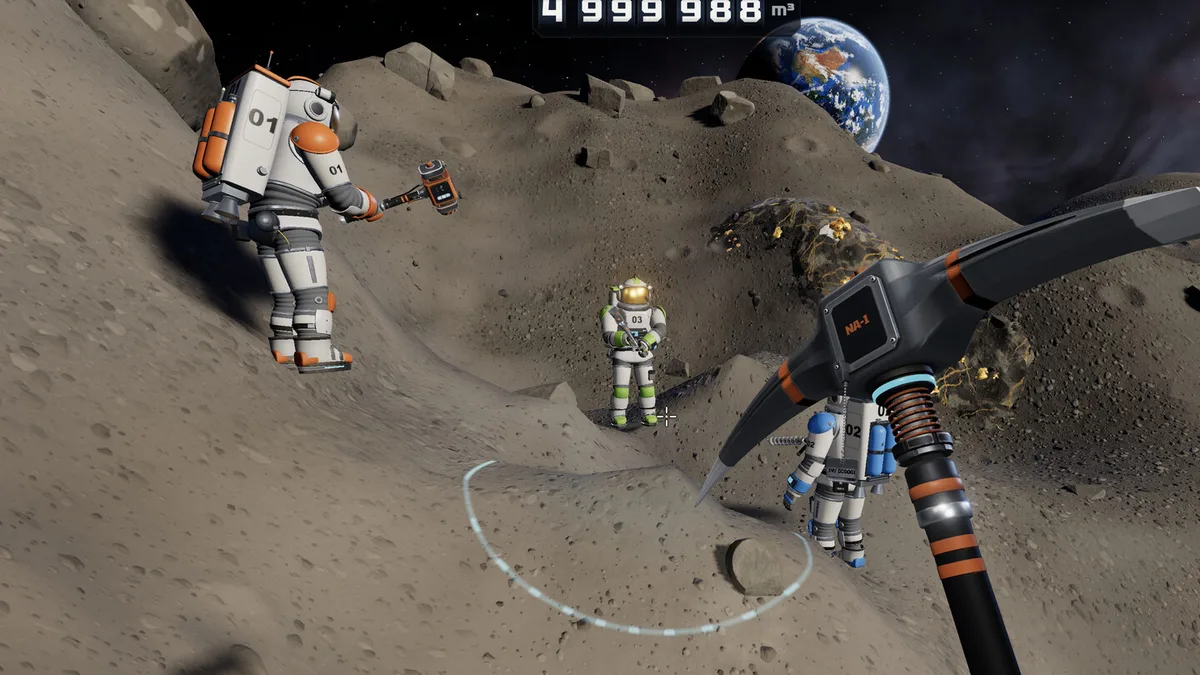
1. Treat air as the only real resource
Credits come back. Days do not. Every decision on the surface should be filtered through the air bar: a vein that costs 20 extra seconds is only worth it if it is crystal or plasmite, not ice. The full timer mechanics are on the air and oxygen page→.
2. Turn around at half air
The single most common death is "one more chunk" at 40 seconds. Half air is the turn-around point for a deep site, and two-thirds is the limit for a shallow one. The lander distance readout is not decoration; it is the second half of the equation.
3. Do not fill the hold with space ice
Space ice sells for 4¢ per unit in the day-30 terminal capture. Plasmite sells for 28¢. A hold of ice is a hold of ballast. Mine ice when you need volume for an Order of the Day or when the hold is nearly empty and the ice is under your feet; otherwise keep walking.
4. Sell before you shop
The terminal and the upgrade shop are in the same room, but the shop does not extend credit. Sell the hold first, then look at prices. This also prevents the classic mistake of buying a 4,000-credit upgrade and discovering the 42,000-credit laser is now six runs away instead of five.
5. Buy one system per day for the first week
Three small upgrades feel better than one medium upgrade. They are not. Air, then cargo, then movement; one purchase a day keeps the next run measurably better. The best upgrades page→ ranks them by payback.
6. Use the scanner before you land
C tags ore through rock at about 25 m with a depth arrow. Landing on a cluster of star gold or crystal is worth more than landing close to the ship and walking. Scan from the surface, pick a cluster, then commit.
7. Combo the vein, do not tap it
Consecutive hits build a combo multiplier; the plasma cutter screenshot shows COMBO ×1.15 and a single hit worth +652. Tap, reposition, tap again and you reset the chain. Stand still, aim at the vein, and let the tool work.
8. Stand on the big chunks
Broken asteroid pieces float. The large ones are platforms: jump on, reach the vein above, cut down. This is also how you recover ore that fell into a hole you cannot climb out of.
9. Start the launch with ten seconds to spare
The pod countdown is ten seconds. Anyone outside when it ends passes out and loses their suit cargo. If you are the host, do not start the sequence until every player is inside; the kick button exists for a reason, but losing a friend's cargo is not a good use of it.
10. Check the Order of the Day before you choose a site
The daily order might ask for 100 m³, 450 m³, or 55 units of star gold. It pays credits for ore you were going to dig anyway, but only if you dig the right ore. Read it before you land, not after you fill the hold with iron.
11. Do not buy ship guns until mining income is stable
The turret costs 1,250 and does almost nothing. The autocannon costs 20,000 and starts to matter. The real guns start at the seismic cannon and railgun tier. Ship guns are a multiplier on a working mining loop, not a replacement for one.
12. Agree who spends the shared wallet before the session
In co-op every credit goes into one wallet, and the host decides who can spend it. A guest who buys a cosmetic with the group's laser money is a diplomatic incident, not a bug. Set the rule in the first minute: host buys tools, guests request, or host grants spending for a specific purchase.
The 90-day math behind all of it
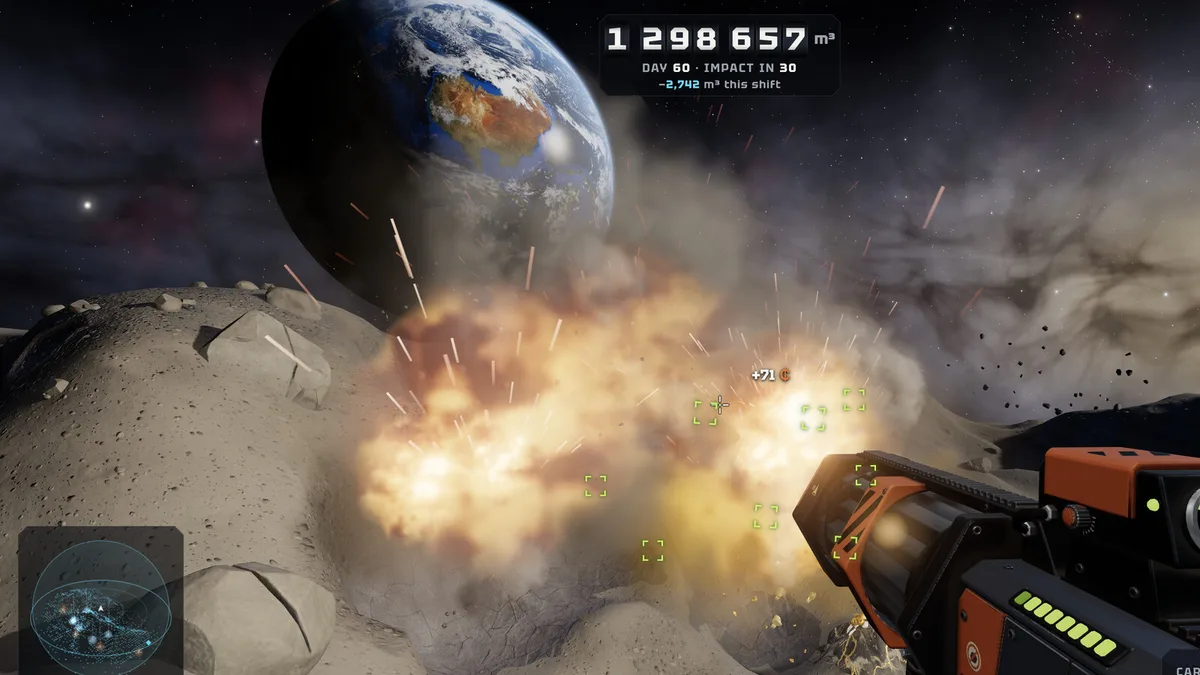
The contract is 5,000,000 m³ over 90 days, which averages 55,556 m³ per shift. Early runs remove a few thousand cubic metres; late runs with ship guns remove tens of thousands. That curve means the first 20 days are an investment, not a scoreboard. The 90-day pace page→ shows the arithmetic and what a realistic mid-campaign day looks like.
Co-op tips that are not obvious
Guests keep their own save, so a friend can progress their solo campaign while helping yours; the host's save is the campaign you are playing. If the host leaves, the session does not promote a new permanent campaign owner. Decide who hosts before anyone spends a evening on the run.
Cross-platform play works between Windows and macOS, but voice chat is not built in. Use an outside call, because the ten-second launch countdown is not something you can type fast enough.
The ten-second countdown does not check the crew. Use the kick function to put a straggler back on the rock instead of stranding them.
Frequently Asked Questions
What is the most common beginner mistake in No Asteroids? Filling the cargo with space ice and returning late. Both cost credits, and both are avoidable with the scanner and the price list.
Do combs reset between veins? Yes. The multiplier is built from consecutive hits on the same target, so switching ore resets the chain.
Should I complete every Order of the Day? No. If the order asks for ore you cannot reach with your current air, skip it. A failed order costs nothing; a failed return costs the whole hold.
Is co-op harder than solo? It is faster if roles are clear. Eight players sharing one wallet can out-dig a solo miner, but only if someone is coordinating purchases.
Sources
Official source: No Asteroids on Steam ↗ Official source: No Asteroids press page ↗ Tested source: Steam launch-build screenshots captured 2026-11-19 (combo, launch and terminal states) Community source: No Asteroids Steam news hub ↗